No. 3 · 8 Nov 2023 · 6 min
Train.Red product case study. (Part 2)
Train.Red product test and unboxing.

Hey ✌️,
Hope you’re all doing well. 🚵♂️
Thanks for reading Sportflow!
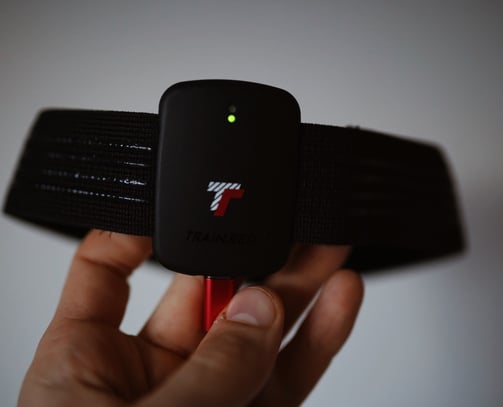
Today we are going to talk about the Train.Red once again and their muscle oxygen consumption sensor. I tried to cover all the aspects from the UX side and AX (athlete experience) and try to answer the questions on how it can improve your training process as an amateur or professional athlete.
Before we start, you have to know, that the price for 1 tracker is 600 €. To measure your both legs or arms, you need 2. In total, it will be 1200 €. To make this test fair enough, we will use only 1 sensor to make sure that in case you would like to purchase it, will be enough. Later you can purchase the second, or even more. 😉
This guide will be divided into several parts because I want to cover too much information and test how this device works in the long run and can help to increase my performance. The main goal is to prepare for half half-marathon on the 3rd of April, 2023 in Berlin with the help of enduco and Train.Red.
What’s inside?
Unboxing (what’s inside the box?)
Setup
Application
First impressions
Run test 9km + speed test
Wrapping up
A note from the author
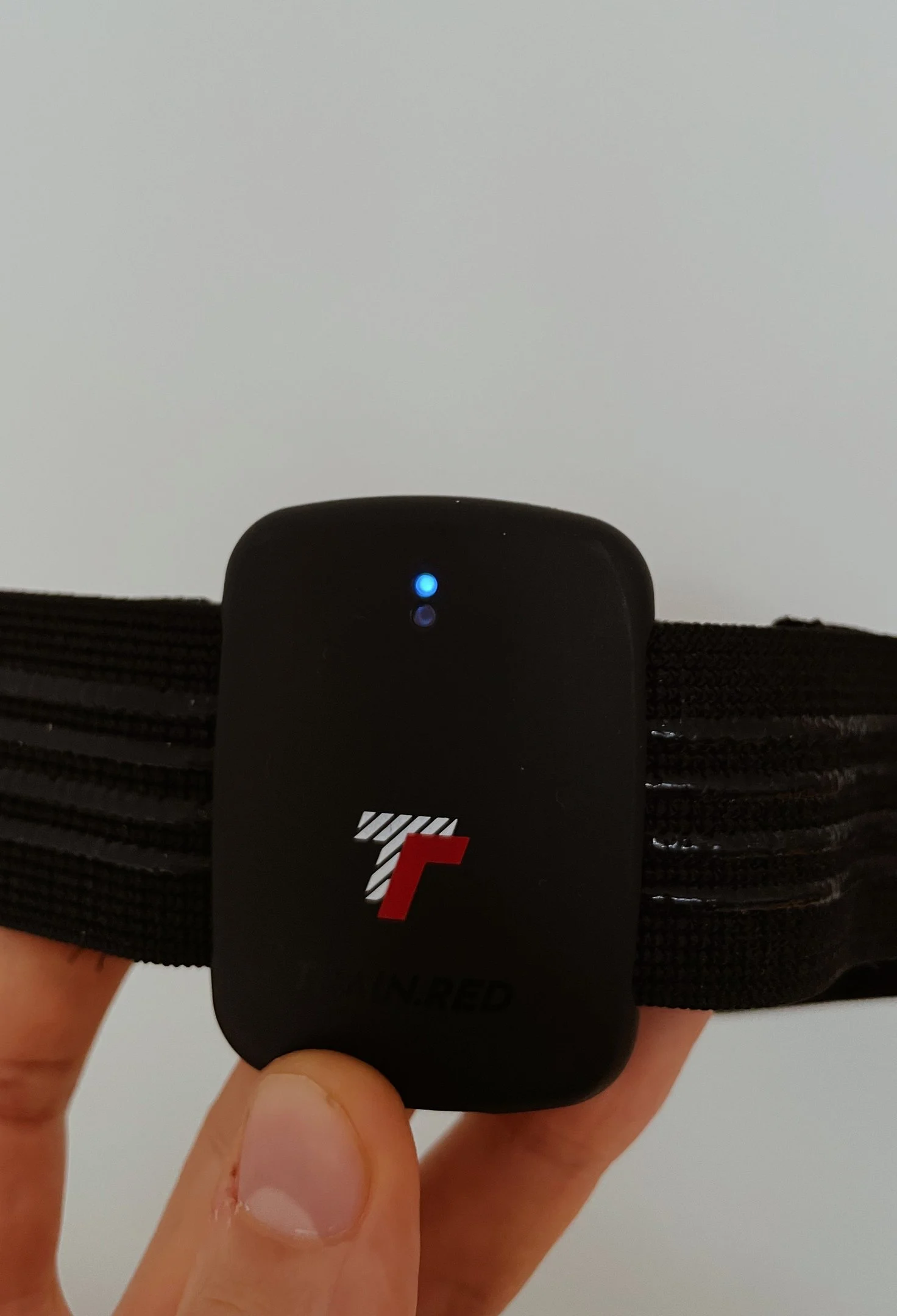
In case you're wondering, there is no Power button. If you would like to understand what's going on with the device, you should follow LED on it.
The green LED is solid while charging.
When the sensor is fully charged when the green LED goes into the blue LED blinking.
When it's connected to your device, LED goes in kind white.
Actually, I just followed their manual and the whole process was very smooth for me. You don't need to be an expert when you're setting up it. You could follow the Train.Red manual. I would recommend it! 😉
Unboxing 📁
At first, I thought that maybe it make sense to record a video instead of text, but later on, I realized that I like to convey my thoughts via text and stopped with this option. So, let’s see what is inside the box.
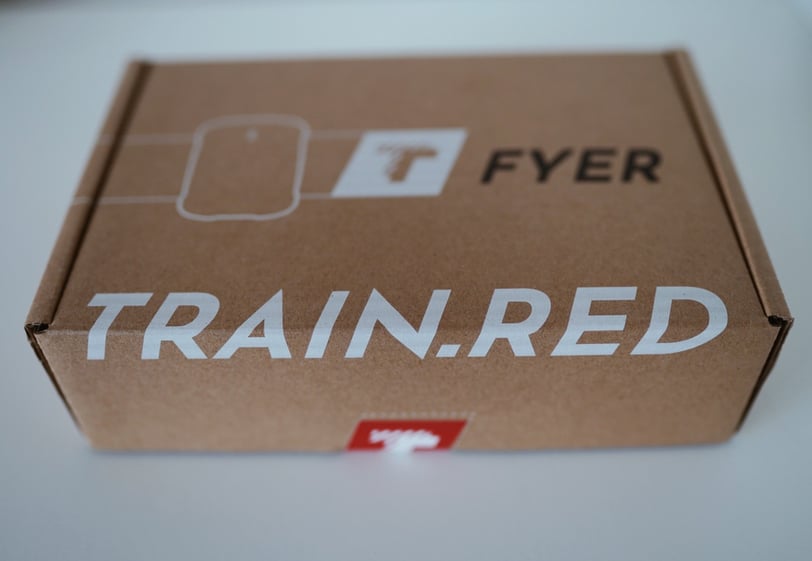
The box looked solid with branded tape on the box when I received it. Do you know why I like things like this? I feel more personal experience when receiving a parcel. Even with delivery, you need to call a WOW effect. Small things matter. What I will add for instance? A personalized card into the box, or something like this. 😉 It could create even stronger relationships from the beginning.
What do you have inside the box?
On the website, you have all the information about the device, but just in case...
Sensor
3 different straps
Patches
Charging cable
Case
No questions at all regarding the box. I like it!
Setup 📄
When I first time did a marketing case about Train.Red I told you that unfortunately, they don’t have an application for iOS right now. If you have an Apple device, you have to use 3rd party application that calls: VO2 Master.
You can download it here.
To track your data in real-time, at least they have a display for Garmin watch that can be downloaded in ConnectIQ here.
IMPORTANT:
If you would like to have your real-time data, you need to connect your Garmin to the FYER device via the watch.
How?
Settings - Sensors & Accessories - Add New.
It will find the tracker and connect it.
When you first time gets your device, charge it. It has a type-c charging cable. To track charging, you’ll see solid green LED.
VO2 Master application setup.
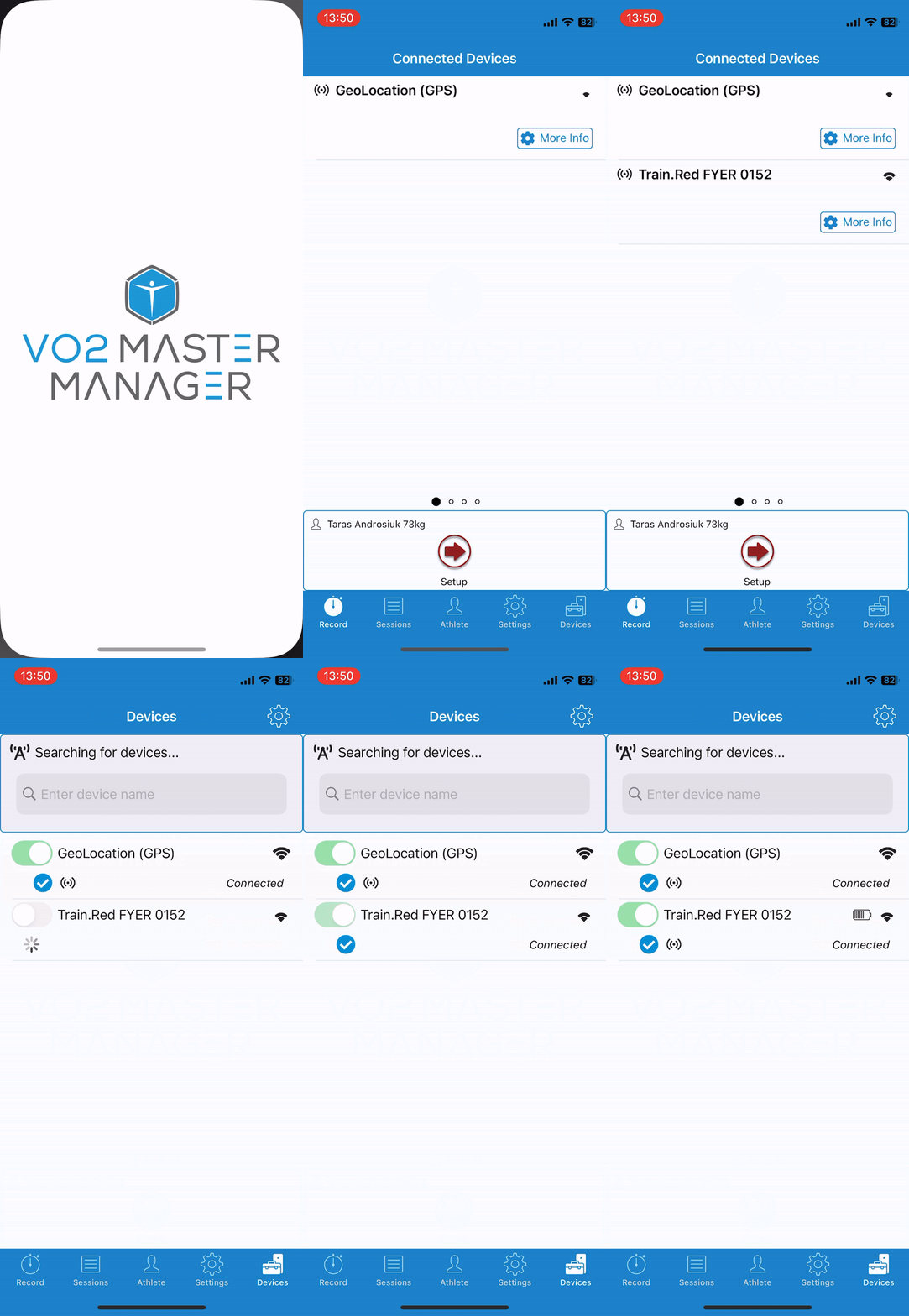
If you don’t have an account, you have to register one to continue and to test your device further. What I like about it, is that they have VO2 Master cloud, where you can see all your data from the laptop. I prefer it more because a number is too small in an application and on the web, it's more convenient. I think VO2 Master is far away from what you expect to see from the app today, but due to the reason, that we are just waiting for an application for iOS, it will be better, based on what I've seen on Android. Having the possibility to use the device with an alternative app is a good approach from a marketing point.
Application 📱
It seems that you're fully equipped. As you can see, it's not harder than setting up your Garmin, Polar, or whatever you want.
First impressions 🚵🏿♂️
I mentioned earlier, that box looks solid with brand style. It doesn't seem like a cheap device because they would like to become a leader in this field. Why I am doing this conclusion? You can see it from the content they are doing and the quality of it.
I read everything they have for now, and all content has been written not just for SEO or keywords. They know what are they talking about. It engages and gives you a better understanding of the product. With time, it will be a great knowledge base about the product. Moreover, you can listen to the podcasts about the topic and industry.
The device looks solid as well, with accessories. So, the overall experience is really good. Do you know why this is important? If they will save now and fail, it will cost a lot. I consider this product like a premium product. The technology and data cost money. Let's be honest, if you have a full-time job, you are more than able to purchase this device.
Run test 9KM 🏃♂️
Right now, I'm not in the best shape of my life, so I decided to do a test and place a device on my left quadricep and run 9 km.
3km warm-up.
1km fast. (3.37)
1km rest.
1 km with a half-marathon pace. (4.20)
3km cool down.
I was afraid that would feel some inconvenience during the run, but I was surprised. It doesn't disturb you at all during your training. Honestly, in the middle of the run, I forgot bout the device. So, if you are afraid that it can rub, no worries. The strap material is soft and doesn't create any issues. If you already have experience with wearable devices, heart-rate straps and etc., you won't get any issues.
The device isn't waterproof, but I did my training with a +9 degree and a little rainy weather conditions.
The device is still alive and works as before.😉
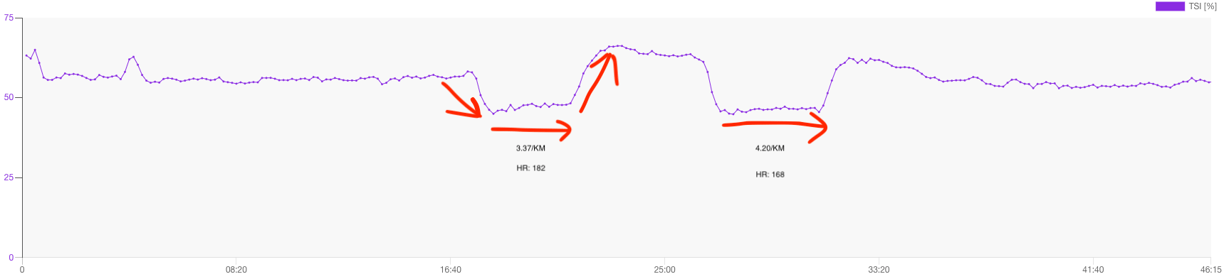
I will have a talk with an expert soon, to ask some questions regarding the data and how I can use it, but at least what I can say without any knowledge based on this graphic.
1) You can see when the load is beginning and how good your oxygen consumption is during the fast run.
2) The surprise for me is the second segment where I've been running for 4:20 for 1KM. It's the usual half-marathon pace, and the heart rate was much lower, but at some point, during the run, the oxygen consumption was worse than the first run. Based on information I have, probably I need more rest than 1km, to have a better consumption for the second segment. This value will be different when I will have a better shape. I would like to do the same test in 1 month and compare the results.
I hope to get even more information after the talk with an expert. That`s cool to see how your muscle reacts to the load and activity. Bear in mind, that heart-rate is an overall measurement, while this is the local data.
Wrapping up 🥙
For now, I'm absolutely satisfied with the product and looking forward to how this could help with my training process. Later on, I will post more information about all tests and the training process as well.
As I wrote earlier, my goal is to run a half-marathon in Berlin in April. So, I started the full 3 months of preparation to complete this job.
The journey looks exciting! Let's see what it brings.
A note from author 👀
I hope you enjoyed this episode as it's the final this year! 🎄
If you have any questions, please feel free to reach out on Linkedin.
P.S. You can use all images for free but put the original source.
Thank you 🔥